Edge protection
Paper Angle Board Manufacturer in Greater Noida
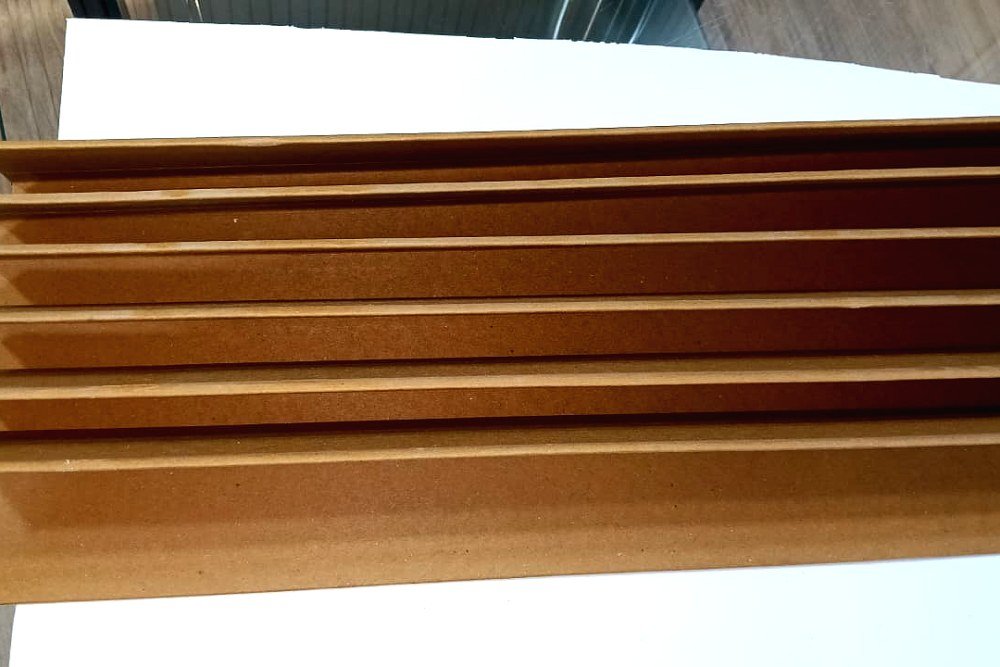
Paper angle board is an L-profile kraft board that takes the compression load off your pallet corners. 3-12 ply, 30x30 mm to 100x100 mm, cut to any length. Made in Greater Noida, dispatched across Delhi NCR in 2-3 working days.
Updated
Commercial terms
- Minimum order
- 10,000 pcs
- Export MOQ
- 50,000 pcs
- Lead time
- 2-3 working days
- HSN · GST
- 48239090 · 18%
- Custom sizing
- From INR 2,00,000

01Specification
What we can make, in numbers
Paper Angle Board — technical specification
| Leg size | 30x30 mm to 100x100 mm 1.18 in to 3.94 in |
|---|---|
| Thickness | 2.5 mm to 8 mm 0.098 in to 0.315 in |
| Ply | 3 to 12 ply |
| Paper grade | 230 to 450 GSM kraft |
| Length | Cut to your size — from 200 mm corner pieces to 2,000 mm full-height lengths 7.9 in to 78.7 in |
| Colour | Brown kraft |
| Coating | Available on request |
| Pieces per bundle | 25 or 50 pcs |
| Bundle weight | 10 kg to 30 kg 22 lb to 66 lb |
| Compression / load rating | Confirming with production — ask us and it goes on your quote |
| HSN code | 48239090 · GST 18% |
| MOQ (domestic) | 10,000 pcs |
| MOQ (export) | 50,000 pcs |
| Pcs per 20ft / 40ft container | Confirming with production — ask us and it goes on your quote |
| Lead time | 2-3 working days |
| Custom size | Yes, minimum order value INR 2,00,000 |
Ranges are what the plant can produce. Your order is made to one point inside them — tell us the pallet footprint, stack height and strap type and we will pick it with you. Dimensions switch between mm and inch above.
What a paper angle board actually does
Put a strap around a stack of cartons and tension it enough to hold the load together, and the strap does not press evenly. It presses hardest where it turns the corner. That is a line a few millimetres wide carrying the whole tension of the strap, and the material underneath it is the top carton, which was designed to hold its contents rather than to be a structural corner.
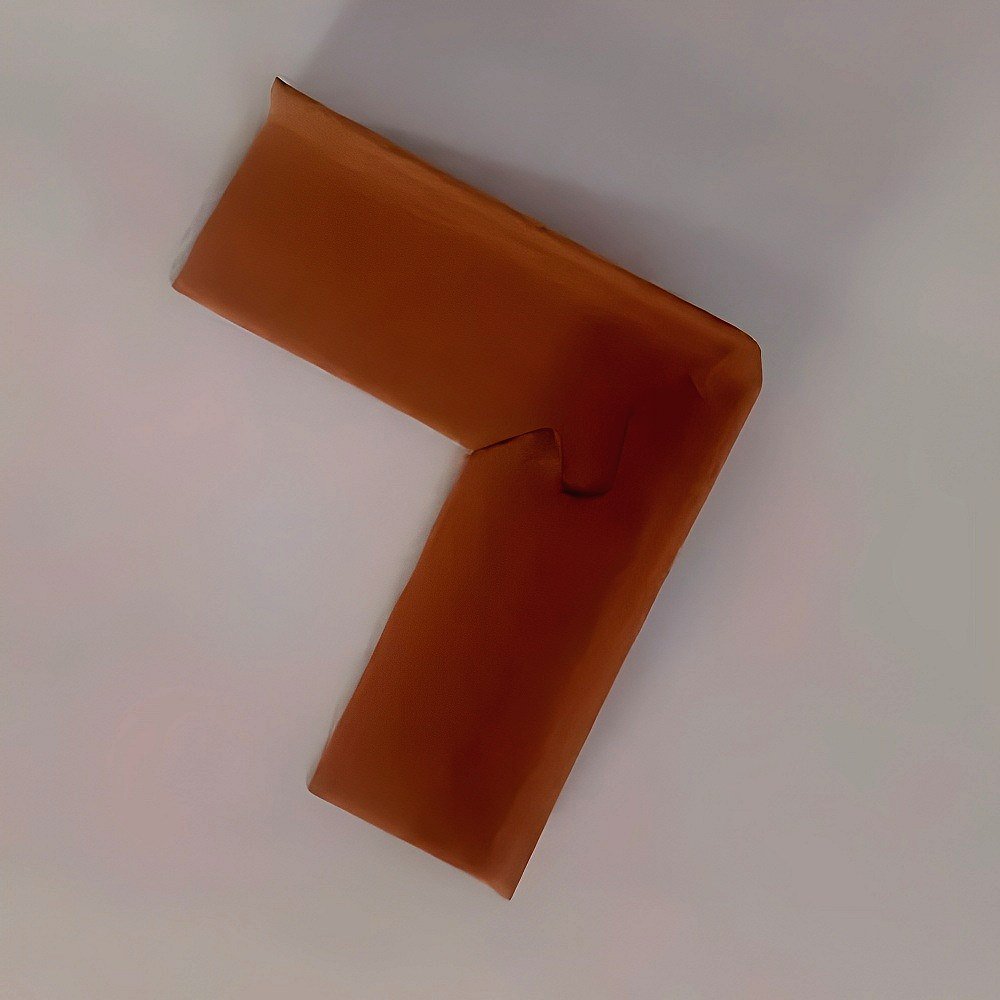
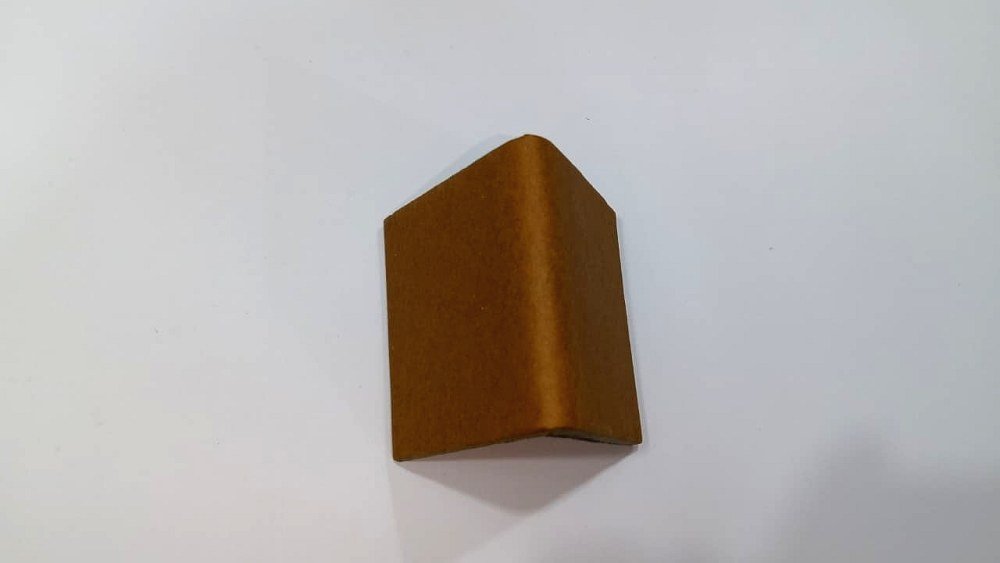
A paper angle board is a rigid L-profile made by laminating layers of kraft paper. It sits in that corner and spreads the strap tension along the full height of the stack instead of letting it concentrate. Two things follow: the strap can be tensioned properly without crushing anything, and the corner becomes a vertical member that resists the load above it rather than collapsing under it.
That is the whole mechanism. Everything else — ply, GSM, leg size, thickness — is a way of deciding how much of that job the board has to do on your particular load.
Four decisions, not one
Most enquiries arrive asking for “5 ply angle board”. That is a quarter of a specification. There are four independent choices, and getting one of them wrong is how a board that looks right on paper fails in a container.
Leg size follows the edge
The leg has to be long enough that the strap lands on board and not on the carton beside it. A small strapped carton edge is covered by a short leg; a full pallet corner under real tension needs more; a wide-footprint or heavy pallet needs more still. Leg size is a geometry question, not a strength question — a heavier load does not need a longer leg, it needs a thicker one.
Thickness follows the compression
Compression at the corner comes from the weight of the load and from whatever is stacked on top of it in transit. Double-stacking roughly doubles what the bottom corner carries; triple-stacking roughly triples it. This is why the answer to “how thick?” usually depends more on how the container is loaded than on what is inside the cartons.
Ply and GSM are not interchangeable
Ply is how many kraft layers are laminated together. GSM is the weight of each of those layers. More ply at the same GSM buys stiffness — resistance to bending along the length of the board. Higher GSM at the same ply buys density — resistance to crushing at the point where the strap bites. Two boards can be the same thickness and behave completely differently, which is why we quote both numbers and not just one.
Length follows the stack
Running the board the full stack height means every strap lands on board. Where only the top and bottom straps need protecting, shorter pieces at those two points cost less and work. We will quote both so you can compare properly rather than standardising on the first option you were shown.
How it goes on the line
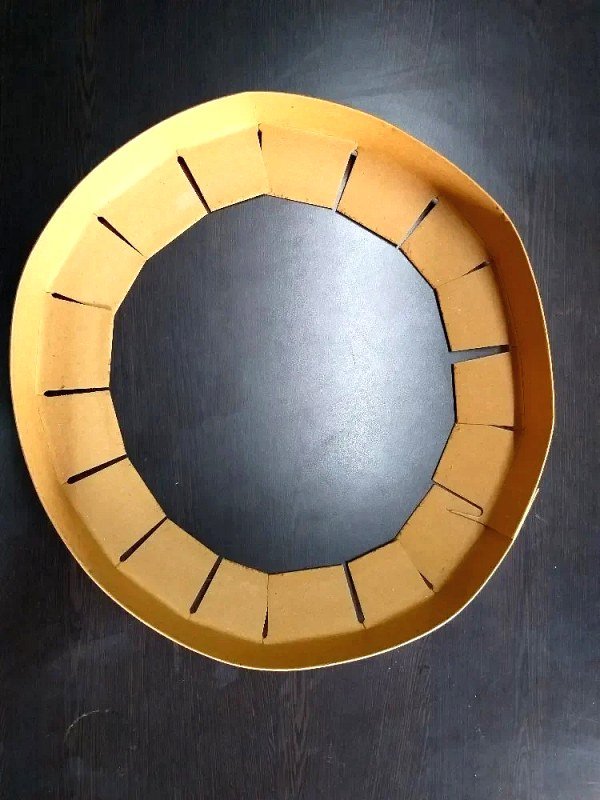
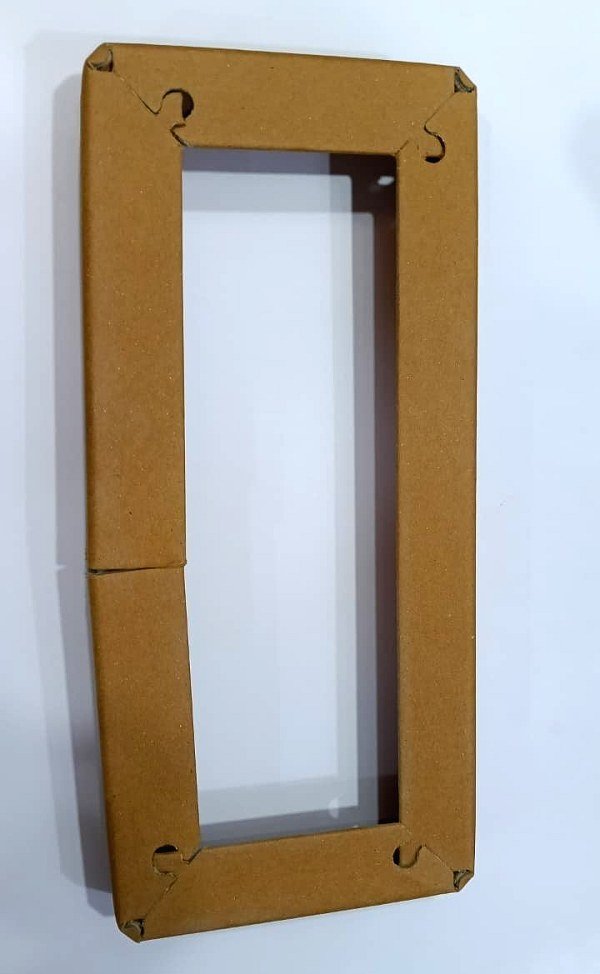
In practice, four boards go on the four vertical corners of the stack before strapping, and the strap is tensioned over them. On tall or uneven stacks a wrap-around frame on the top deck does more than four separate corners, because the top layer is what gets crushed first. Where the board has to hold position before the strapping head arrives — typically on a moving line with one operator — the self-adhesive version removes a taping step.
The mistake we see most often is a board that is correctly specified and too short. It protects the top and bottom straps, the middle strap lands on carton, and the damage keeps happening in exactly one place on every pallet. If your damage is repeatable and always at the same height, that is usually why.
Paper, plastic or foam
Plastic corner protectors are reusable and survive wet cycles better, which matters in a closed returnable loop. Foam corners absorb impact rather than spreading compression, which suits fragile single items rather than palletised stacks. Paper board does the compression job, costs less per corner at pallet volumes, and disposes into the same waste stream as the cartons it is protecting — which is increasingly what a European or Gulf consignee wants.
We make the paper version, so treat that summary accordingly. What we can say without a conflict is that if your consignee is separating and paying to dispose of plastic corners today, that is a cost you are exporting to your customer.

02Profiles
Five shapes, one material
The profile follows the edge you are protecting. Pick the shape first, then the ply and thickness.

Angle board variant
L Shape Edge Protector
An L shape edge protector is the standard 90-degree profile - two equal legs that sit on a pallet corner and carry the strap.…

Angle board variant
U Shape Edge Protector
A U shape edge protector is a channel profile that wraps a flat edge on three sides. Used where the thing being protected is…

Angle board variant
V Shape Angle Board
A V shape angle board is for edges that are not 90 degrees. The angle is set to your product, so the board sits…

Angle board variant
Wrap Around Edge Board
A wrap around edge board is one scored length that folds around the full perimeter instead of four separate corners. Notched, the same board…

Angle board variant
Self Adhesive Edge Board
A self adhesive edge board is pre-gummed on the inside faces, so it stays where it is placed without a separate tape step. Built…
03Where it is used
Sectors that specify this product
Automotive
Tier-1 supply runs to the assembly line, not to a warehouse. Packaging that arrives crushed…
Pharmaceutical
Pharma QA does not buy adjectives. It buys a material it can document, from a…
Electronics & Appliances
High-value, light, and tall. Appliance and electronics pallets fail at the corner long before they…
Glass, Ceramic & Stone
The highest-value use of an edge protector there is: the product itself is the edge,…
04Questions buyers ask
Questions about paper angle board
10,000 pieces for domestic orders and 50,000 pieces for export. We publish this openly because a smaller enquiry wastes your time and ours. If your monthly requirement is below that, we can usually schedule it as a standing order across two or three despatches instead.
Leg size follows the edge you are protecting, not the weight: a 30x30 mm leg covers a strapped carton edge, while 75x75 mm and 100x100 mm are used on full pallet corners where the strap tension is concentrated. Thickness follows the load - 2.5 to 4 mm for light stacking, 5 to 8 mm where pallets are double- or triple-stacked in transit. Send us the pallet footprint, stack height and strap type and we will specify it for you.
Ply is the number of kraft layers laminated together; GSM is the weight of each layer. More ply at the same GSM gives you stiffness, which resists bending. Higher GSM at the same ply gives you density, which resists crushing at the strap contact point. Our range is 3 to 12 ply in 230 to 450 GSM kraft, and the two are specified together - "5 ply" on its own tells you very little.
Yes. Leg size, thickness, ply and length are all made to order. Custom tooling and setup mean a minimum order value of INR 2,00,000 applies to non-standard sizes. Standard sizes within our published range carry no such minimum beyond the usual MOQ.
2-3 working days from confirmed order for standard sizes. Greater Noida, Noida and Delhi are usually same-day or next-day despatch because the plant is in Jalpura, Sector 1, Greater Noida. Custom sizes add tooling time, which we confirm on the quote.
Yes. It is made from kraft paper and goes into the regular paper waste stream - no nails, no plastic core, no separation step for your customer. That matters more each year: EU buyers increasingly ask for packaging that can be recycled in a single stream.
HSN 48239090, GST 18%. This was confirmed by the company CA in September 2026. We keep a full breakdown, including how to describe it on the invoice, on our paper angle board HSN and GST page.
Printing and coating are available on request. Tell us what you need on it - a batch code, a handling instruction, or your own mark - and we will quote it with the board.
Three reasons buyers give us: it disposes into the paper stream instead of becoming plastic waste at the receiving end, it grips the strap instead of letting it slide, and it costs less per corner at the volumes most pallet lines run. Plastic still wins where the corner has to survive repeated wet cycles - we will tell you when that is your case.
Yes. Angle board, edge protector, edge board, corner board, corner protector and edge guard are all names for the same L-profile board of laminated kraft. Buyers in India mostly say angle board, UK buyers tend to say edgeboard or cardboard edge protector, and US buyers say corner board. The U, V, wrap-around and self-adhesive versions are different profiles of the same board.
We quote per piece or per metre against your specification instead of publishing one rate, because five things move the price: thickness (the biggest one - an 8 mm board uses about three times the paper of a 2.5 mm board with the same leg), leg size, the GSM of the kraft, length and cut tolerance, and the quantity you order each month. Send us the leg size, thickness, length and monthly quantity, and the quote comes back on those four numbers.
A manufacturer. The board is laminated, dried and cut at our own plant in Jalpura, Sector 1, Greater Noida, and you are welcome to visit if you call ahead. The business is registered as Solution Enterprises, and the GSTIN, Udyam and IEC numbers on our company details page can be checked on the government portals.
Yes. We deliver across North India from Greater Noida - Haryana, Rajasthan, Punjab, Uttarakhand and Himachal industrial belts included. Delivery time goes up with distance; see our delivery locations page for the current schedule.
05Also from this plant
Products buyers usually order alongside

No ISPM-15 needed
Paper Pallet (Honeycomb)
We are a paper pallet manufacturer: a pallet made entirely from recycled kraft. No heat treatment, no fumigation, no IPPC stamp, no NPPO registration…

Winding cores
Paper Core Tube
We are a paper core tube manufacturer for textile, film, paper and foil rolls. Inner diameter, wall thickness and length are made to your…

Strapping
PET Strap
PET strap manufacturer and supplier of high-tensile polyester strapping for palletised and heavy loads - the safe replacement for steel strap, with retained tension…
Guides for this product
Send the load, not just the product name
Pallet footprint, stack height, monthly quantity and destination. With those four we can specify paper angle board properly instead of quoting a guess.